Tennis Elbow Isn’t Just for Tennis Players: Habits That Make It Worse
Do you have pain on the outside of your elbow, even though you have not picked up a racquet in years? Tennis elbow is named for the sport, but tennis players make up only about 10% of the people who get it.
Far more often, the cause is what you do every day: typing, lifting, gripping tools, carrying bags, and keeping up with the kids. This guide from Castlemore Advanced Therapeutics in Ontario covers the everyday tennis elbow habits that keep your pain going, and the simple changes that help it settle.
What Tennis Elbow Really Is
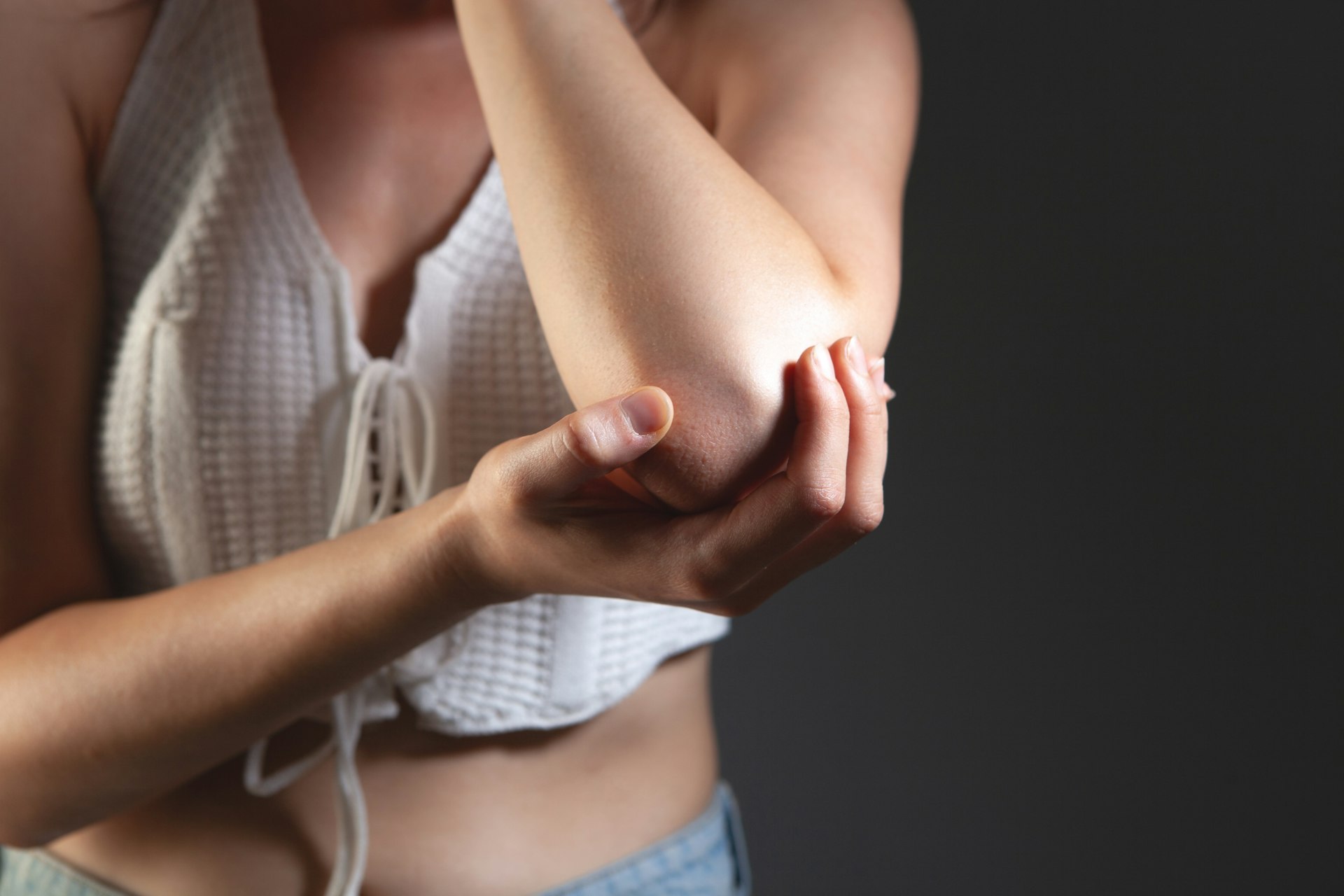
Tennis elbow, also called lateral elbow tendinopathy, is pain at the tendon on the outside of your elbow. That tendon anchors the forearm muscles that lift your wrist and fingers. When it is asked to do more than it is ready for, it becomes irritated and sore. It is irritated, not torn, which is why strength helps it recover.
Typical signs include pain on the outer elbow when you grip, lift, shake hands, or turn a doorknob, and sometimes a weaker grip. It is more common after age 40, and repeating wrist movements for two hours or more a day, or doing vigorous work with heavy loads, are listed as risk factors.
The good news is that most people get better. The natural course is favorable, with recovery within 1 to 2 years in 80% to 90% of people. That is a long time to wait, though, and changing your habits can help you get there sooner.
Everyday Tennis Elbow Habits That Make It Worse
The tendon does the most work when you grip hard or use your wrist while it is bent back. These common habits keep it irritated:
| Habit | Why it flares your elbow | Try this instead |
| Gripping hard with your wrist bent back, such as a mug, kettle, or tool | Tight gripping with a bent wrist loads the tendon the most | Keep your wrist straight, hold with your whole hand, and loosen your grip |
| Lifting with your palm facing down, such as jugs, buckets, or weights | It puts extra strain on the wrist extensors | Lift with your palm facing up or your thumb facing up when you can |
| Long stretches of mouse and keyboard work | Repeated wrist movement for hours adds up | Keep your wrists straight, take short breaks, and switch tasks often |
| Hand tools, gardening, and painting | Repeated, forceful gripping loads the tendon | Alternate hands, use padded handles, and break the job into shorter sessions |
| Weekend project spikes, or going back to sport too fast | A sudden jump in load outpaces what the tendon is ready for | Spread big jobs over several days, and build up gradually |
Recovery Habits That Can Slow You Down
Some things we do to protect a sore elbow can backfire:
- Resting completely can feel safe, but in trials exercise did better than waiting and seeing, although the effect was small and the evidence was low certainty (Karanasios et al., 2021).
- Wearing a brace all day is not a full plan, because the evidence for braces is mixed, so use one as a short-term helper during demanding tasks.
- Relying on an injection to fix it may not last, because corticosteroid injections may help for under 6 weeks but have not been shown to help long term.
- Pushing through early pain tends to turn a short-term irritation into a months-long one.
What Actually Helps: Load It Gradually
Tendons respond to gradual, well-planned loading. That means easing off the habits above, not stopping all movement, while you rebuild strength. A 2021 review of 30 trials with 2,123 people found that exercise worked better than passive treatments, such as injections or waiting, although the effect was small and the certainty of the evidence was low (Karanasios et al., 2021). Exercise is a sensible first step.
A common starting exercise is a slow wrist extension:
- Rest your forearm on a table with your palm facing down and your wrist just off the edge.
- Use your other hand to help lift a light weight to the top.
- Lower it slowly with the sore arm over three to five seconds.
A physiotherapist sets the weight and pace, because the right dose depends on how irritable your tendon is. Grip strengthening is usually added as your pain settles.
When to See a Physiotherapist
Consider booking an assessment if you notice:
- pain that is not settling after a few weeks of changing your habits
- a weak grip or trouble lifting a cup
- pain that is disrupting your work, sleep, or hobbies
- pain that keeps returning each time you go back to your usual activities
Numbness or tingling in your hand, or sudden severe pain after an injury, should be checked by your doctor.
Let’s Get Your Elbow Back to Normal
You do not need to give up what you love. You need a plan that matches your tendon’s capacity to what you do. At Castlemore Advanced Therapeutics in Ontario, we build exercise and tendon-loading programs that fit your work, your home, and your activities. We will look at how you use your arm every day, find the habits worth changing, and strengthen the tendon step by step. Reach out to book an assessment whenever you are ready.
References
Buchanan, B. K., & Varacallo, M. A. (2023). Lateral epicondylitis (tennis elbow). In StatPearls. StatPearls Publishing. https://www.ncbi.nlm.nih.gov/books/NBK431092/
Karanasios, S., Korakakis, V., Whiteley, R., Vasilogeorgis, I., Woodbridge, S., & Gioftsos, G. (2021). Exercise interventions in lateral elbow tendinopathy have better outcomes than passive interventions. British Journal of Sports Medicine, 55(9), 477-485. https://bjsm.bmj.com/content/55/9/477