Chronic Ankle Instability: Why Your Ankle Feels “Loose”
Stepping off a curb, walking across an uneven lawn, or making a sudden turn on the sports field shouldn’t come with a flash of hesitation. Yet for many people, every step on an uneven surface triggers a deep feeling of insecurity in the lower leg. That lingering sensation that your ankle is going to give out, turn inward, or fail to support your body weight is the classic presentation of Chronic Ankle Instability (CAI).
It is common for individuals to dismiss this condition, assuming they simply possess weak joints or bad luck. However, feeling like your ankle is loose isn’t something that randomly happens. It is a specific, treatable biomechanical issue that develops when the body fails to properly recover from joint trauma.
At Castlemore Advanced Therapeutics, we help patients unpack the underlying structural and neurological reasons behind their unstable ankles, guiding them back toward confident, pain-free movement.
Anatomy of an Ankle Sprain: What Actually Happens?
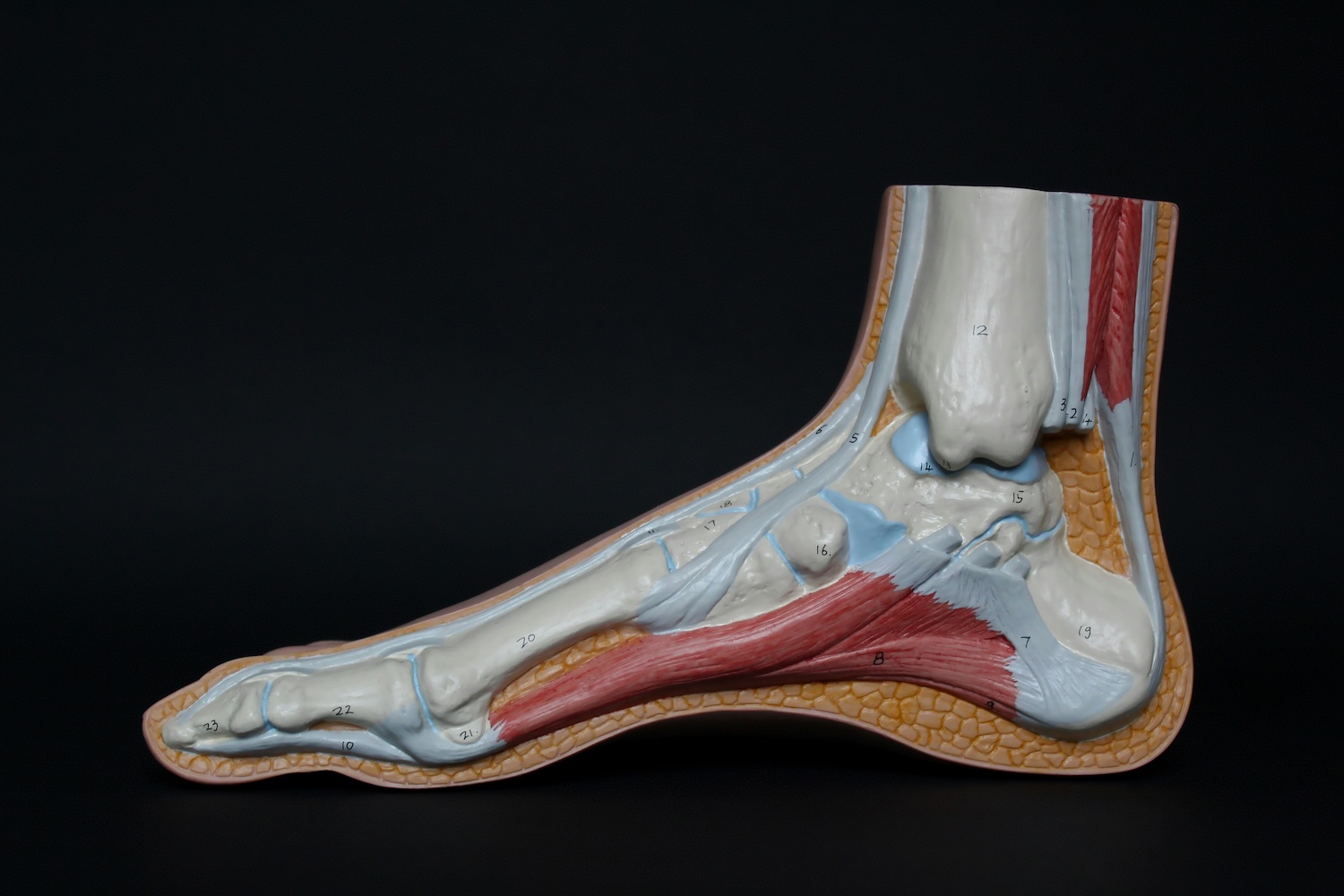
To understand chronic instability, it helps to look at the anatomy of the lateral ankle joint. The outer side of your ankle relies on a group of static stabilizers, which are bands of tough, fibrous connective tissue known as ligaments.
When you roll your ankle, these ligaments are stretched beyond their natural limit, resulting in microscopic tearing. However, ligaments are only part of the equation. Inside these tissue fibers and the surrounding ankle joint are thousands of sensory receptors called proprioceptors.
These receptors act as the motion sensors for your nervous system, constantly sending lightning-fast positional signals to your brain. When you step on an uneven surface, these sensors tell your brain to instantaneously contract the surrounding muscles to keep your ankle upright.
When a sprain occurs, both the physical mechanical tissues (ligaments) and the electrical signaling systems (proprioceptors) suffer damage. Without structured rehabilitation, this breakdown creates the ideal environment for chronic instability.
The Vicious Cycle: Why Prior Sprains Lead to Instability
The primary predictor of chronic ankle instability is an improperly rehabilitated initial ankle sprain.
Skipping full rehabilitation after an initial sprain sets off a predictable downhill cycle. When torn or stretched ligaments heal in a lengthened position, the damaged nerve sensors inside the joint fail to send timely balance signals to the brain. This delay alters your walking mechanics and slows your muscle reaction time, leaving the joint unprotected and leading directly to persistent “giving-way” and repeated injuries.
The risk of this cycle occurring is remarkably high: research shows that up to 70% of people who suffer an acute ankle sprain will go on to experience recurrent sprains or develop chronic ankle instability without proper rehabilitation
Mechanical vs. Functional Instability
When evaluating chronic ankle instability at Castlemore Advanced Therapeutics, we categorize the issue into two main drivers, though most patients experience a combination of both:
| Feature | Mechanical Instability | Functional Instability |
| Primary Cause | Physical elongation or tearing of lateral ligaments. | Disrupted neuromuscular control and delayed sensor reflexes. |
| Clinical Presentation | Excess physical joint play measured during clinical testing. | The subjective sensation of the ankle giving out during normal movement. |
| Primary Driver | Structural tissue laxity and altered joint mechanics. | Muscle weakness, poor balance, and loss of joint proprioception. |
| Therapy Focus | Dynamic muscular compensation and joint centering. | Balance retraining, reactive strength, and neuromuscular drills. |
The Role of Genetics and Body Structure
While prior injury is the main cause of chronic instability, inherited genetic traits can make certain individuals far more susceptible to joint looseness:
1. General Ligamentous Hypermobility
Some people are born with connective tissue that contains higher amounts of flexible collagen fibers. If you have hypermobility, your ligaments naturally allow more joint movement throughout your body. In the ankle, this inherent flexibility means your static restraints offer less passive resistance, forcing your surrounding muscles to work twice as hard to maintain joint integrity.
2. High Arches (Pes Cavus)
Foot structure plays a significant role in weight distribution. Individuals with high, rigid arches naturally carry more of their body weight along the outer (lateral) edge of the foot. This alignment creates a constant mechanical lever that encourages the ankle to tilt outward, increasing the risk of rolling the joint during basic walking or running.
3. Hindfoot Varus Alignment
If your heel bone naturally tilts inward relative to your lower leg, your foot sits closer to the point of inversion. This structural variation leaves less room for error when landing on uneven terrain.
Why CAI Is Fully Treatable
Discovering that your ligaments are stretched or that your genetics lean toward hypermobility can sound intimidating. You might worry that surgery is the only way to tighten a loose joint. Fortunately, conservative physical therapy successfully resolves the vast majority of chronic ankle instability cases.
Your body possesses a powerful backup mechanism: dynamic stability. While stretched ligaments may not shrink back to their original size, the tendons and muscles surrounding your ankle (specifically the peroneal muscles running along the outside of your calf) can be trained to act as dynamic reins. By strengthening these muscles and retraining your nervous system to react faster, your dynamic stabilizers take over the workload, compensating for lax ligaments and keeping the joint centered.
3 At-Home Exercises to Rebuild Ankle Stability
To help transition your ankle from loose to reliable, incorporate these three targeted, evidence-based exercises into your weekly routine:
4-Way Ankle Resistance Band Circuit
Why It Works: Strengthens all four muscle groups surrounding the ankle joint, building balanced dynamic support.
How to Do It: Sit on the floor with your working leg extended straight out. Wrap a medium resistance band around the ball of your foot. Anchor the other end of the band around a heavy table leg or hold it firmly in your hands. Perform movement in four distinct directions:
- Dorsiflexion: Pull your toes toward your shin against the resistance.
- Plantarflexion: Push your foot forward like pressing a gas pedal.
- Inversion: Turn the sole of your foot inward toward your opposite leg.
- Eversion: Pull the outer edge of your foot up and outward (crucial for peroneal strength).
- Parameters: Complete 2 to 3 sets of 12 to 15 controlled repetitions in each direction.
Standing Calf Raises Off a Ledge
Why It Works: Rebuilds calf strength, strengthens the Achilles tendon, and improves eccentric control (controlling the muscle while it lengthens).
How to Do It: Stand with the balls of your feet on the edge of a step, letting your heels hang off the back. Hold onto a wall or railing for light balance assistance. Push through your big toes to raise your body as high as possible, pausing for 1 second at the top. Slowly lower your heels below the step level over a 3-second count until you feel a comfortable stretch in your calves.
Parameters: Perform 3 sets of 10 to 12 repetitions, keeping the movement slow and controlled.
Narrow Base Stabilization with External Load
Why It Works: Forces the deep proprioceptors in your ankle to make rapid micro-adjustments against a moving center of gravity.
How to Do It: Stand upright with your feet placed tightly together (a narrow base of support). Hold a light dumbbell, kettlebell, or a soup can in your right hand. Keeping your chest upright and your core engaged, slowly pass the weight across your body to your left hand. Move the weight in small arcs outside your body frame, forcing your ankles to react to the shifting load.
Progression: Once this feels easy, perform the exercise with one foot directly in front of the other, or while standing on one foot.
Parameters: Continue passing the weight back and forth for 30 to 45 seconds per set. Complete 3 total sets.
What to Expect at Castlemore Advanced Therapeutics
Self-directed exercises offer a great starting point, but overcoming long-standing instability requires a personalized approach. At Castlemore Advanced Therapeutics in Ontario, our comprehensive assessment includes:
- Biomechanical Assessment: Evaluating your foot structure, arch flexibility, and lower extremity alignment.
- Ligamentous Laxity Testing: Performing gentle, specific manual tests to gauge structural stability.
- Neuromuscular & Balance Profiling: Assessing your single-leg stance control, balance reach, and joint reaction times.
- Targeted Manual Therapy & Rehabilitation: Utilizing hands-on techniques to restore joint mobility, followed by progressive strength, agility, and sport-specific retraining.
If you are ready to overcome chronic ankle instability, contact Castlemore Advanced Therapeutics in Ontario today to schedule your comprehensive assessment and start your journey toward strong, dependable movement.